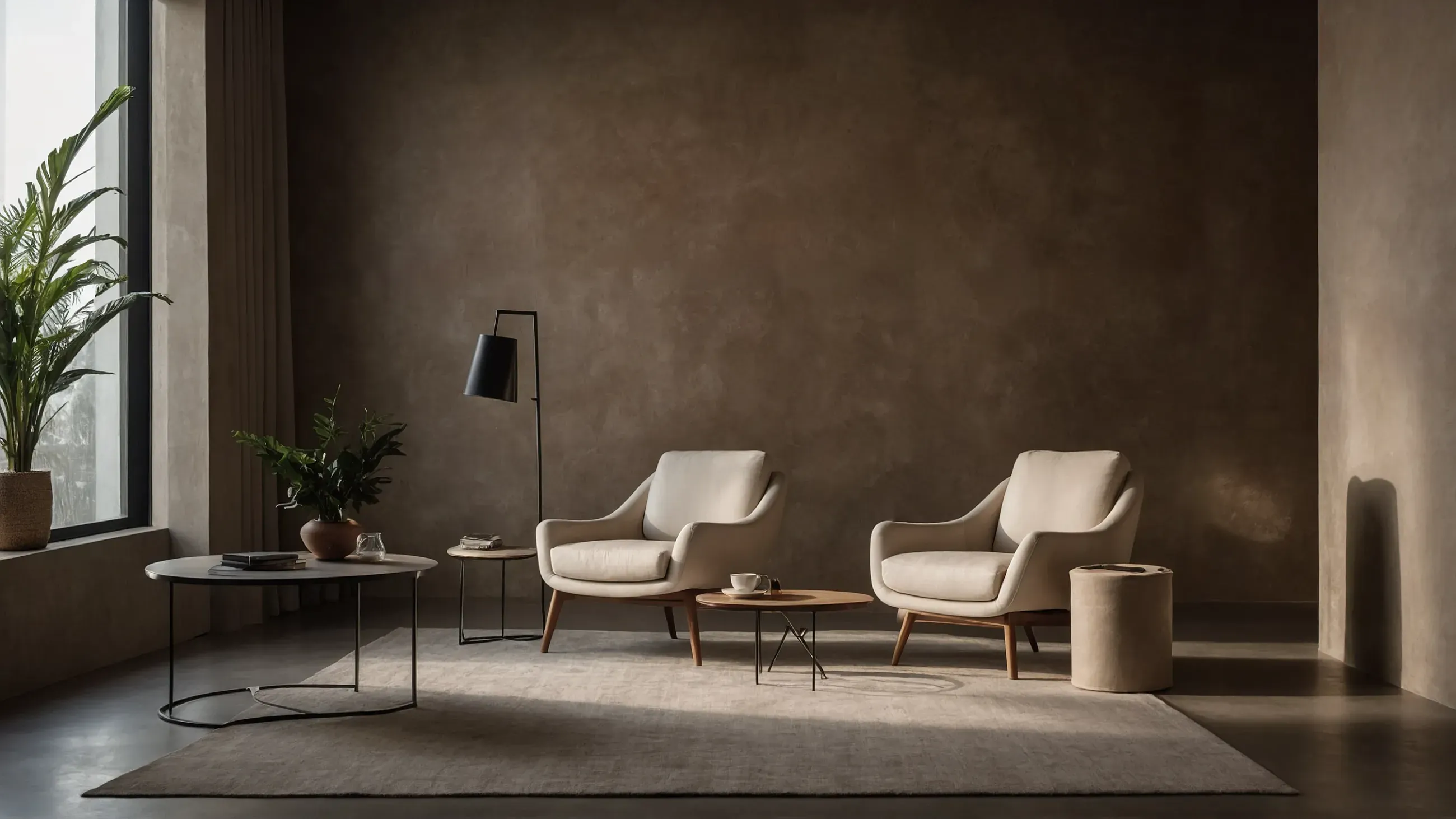
If you're renovating a villa in Dubai and thinking "I want that joint-free concrete look," you'll run into two answers fast: microcement and polished concrete. They look related (both gray, both continuous, both modern), but they are completely different materials with different costs, install times, and constraints. This guide breaks the choice down with the numbers, the trade-offs, and the questions our installers ask first.
What's the actual difference?
Polished concrete is your floor. It's the structural slab itself, ground flat and sealed in place. Microcement is a 2 to 3 mm decorative coating applied over an existing surface: concrete, screed, tile, even drywall on walls. Polished concrete is a substrate decision; microcement is a finish decision.
That single distinction explains most of the trade-offs that follow.
When polished concrete wins
- New build, slab on grade. If you're pouring a new slab and the slab will be the floor, polish it. You skip the cost of a second material entirely.
- Industrial or back-of-house spaces. Warehouses, garages, plant rooms: places where utility wins over warmth.
- Heavy point loads. Forklift wheels, stone-cut tooling: full slab thickness handles concentrated loads no overlay can.
When microcement wins
Most Dubai renovations, frankly. The reasons stack:
- Renovating, not building. Existing tiled floors, screeds, even concrete that's not flat enough to polish: microcement goes over them. Mini-S is the ultra-thin overlay system built for this.
- Apartment-tower friendly. Polished concrete needs the slab. In an apartment, ripping up tiles to get to it is rarely allowed. Microcement adds 2 to 3 mm, so door clearances stay fine.
- Wet zones. Polished concrete is not waterproof. Microcement systems like Idropol 200 Opaco are engineered for bathrooms, showers, and pools.
- Walls. The same continuous look extends from the floor up the walls, which polished concrete cannot do.
- Colour control. Polished concrete is whatever colour your aggregate gave you. Microcement is custom-matched to any RAL or Pantone reference, with a 48-hour sample turnaround.
What about cost?
This is where intuition misleads people. Polished concrete looks cheap because "it's just the floor." It isn't.
In Dubai, polishing an existing slab to a high-end finish requires industrial diamond grinding equipment, multiple grit passes, densifier application, sealing, and sometimes patching of cracks revealed during grinding. By the time you account for slab repair and the polishing process, the per-square-metre cost sits in the same ballpark as microcement, sometimes higher.
Microcement pricing depends on substrate condition, square metres, and finish (matte vs gloss vs textured). In its favour: no demolition, no slab repair, and a timeline of a week or two for a typical residential project.
For a precise comparison, request a quote. We'll come, look at the substrate, and price both options if both are viable.
Install time
| Stage | Polished concrete (existing slab) | Microcement (over existing) |
|---|---|---|
| Substrate prep | Repair cracks, level dips, days of grinding | Clean, prime, repair if needed |
| Application | Multiple grit passes, days each | Base + finish coats over 2 to 3 days |
| Sealing | Densifier + sealer, multiple coats | Sealer applied in hours |
| Total (typical 30 sqm residential) | 10 to 14 days | 5 to 7 days |
Maintenance
Both materials are low-maintenance. Polished concrete needs occasional re-densifying every few years for high-traffic floors. Sealed microcement needs warm water, a soft cloth, no abrasive cleaners, and a re-seal every 5 to 7 years for high-traffic floors. In bathrooms and pools the sealer is part of the waterproof build, so reseal cycles are part of the system, not optional.
The honest verdict
If you're building a warehouse, polish your slab. If you're renovating a Dubai apartment or villa, microcement is almost always the right answer: same look, fewer constraints, faster install, custom colour, and it can extend up the walls and into wet zones. The cost difference rarely justifies polishing a slab you're going to cover with a rug anyway.
If you'd like a real specification for your space, browse our systems or request a site visit.